In Bengal’s riverine culture, fish consumption is a dietary staple with pervasive importance that is conterminous with social customs, rituals, and indigenous knowledge systems prevalent in the region (Das 2000). Occupational folklore (Byington 1978)—that is, performances done exclusively within a work environment—of the jele (fishing community), clearly demonstrates that fish-related rites, beliefs, narrated encounters, proverbs, taboos, and restrictions observed to ensure a continuous supply of fish throughout the year is replete in the repertoire. Prominent rituals like worshipping boats, fishing nets and equipment, removing the najar lāgā, (evil eye) and adulating folk deities are some of the many ways that locals concoct the cultural characteristics of this community before the fishers begin their haul every season. The Bengal deltaic region fishing community is a heterogeneous group comprised of baṃśagata māch cāṣ (caste-based subsistence fishers) including traditional groups such as the Bagdi, Mahishyas, Jelekaibartas, Tiyor, Malos, and others (Chakraverti 2014, 32)[1] and byapśagata māch cāṣ (commercial fisheries). However, Santanu Chakraverti (2014, 8) notes there is some difference between fishing and non-fishing specialists:
Ancestral practice and caste identity is certainly one of the factors in choosing an occupation, but opportunity and convenience has played a major role, particularly during the last two decades. Parental occupation is of course important, but that, in the context of the Sundarbans, has not been synonymous to caste-determined occupation from the very beginnings of settlements in this area. Further, fishing as an occupation does not exclude other occupations. Many fishers are cultivators, labourers, carpenters, and so on, on the side.
This is true for the fishers in the Sundarbans delta. Several fishing activities, such as catching fish in fresh water, brackish waters, or the deep sea, depend on proximity, since complex waterways, lagoons, tidal channels, creeks, and estuaries make their way through the Sundarbans archipelago which consists of one hundred and two islands alone in the Indian portion. For traditional groups living here, fishing-related activities are a way of life, and catching and selling fish is part of their family and community traditions. The sons, fathers, uncles, and other patriarchs pass down a storehouse of ancestral memories, experiences, lessons, anecdotes, vernacular songs, sayings, cooking methods, recipes, taboos, indigenous tools, and fishing techniques that serve as valuable resources for survival, not to mention a rich body of oral tradition that can teach us much about the role of local knowledge as a form of oral exegesis (Korom 1997). Newer experiences of the current generation also get quickly assimilated into the indigenous knowledge system of the community. In this article, I draw on the worship of a folk deity called Makal ṭhākur (Lord Makal). The community associated with worshipping this deity consists of small and marginal Sundarbans fishing group engaged in tank fishery, common fishpond farming, and other aquaculture activities. For my research I interviewed 19 subjects (17 men and 2 women) aged between twenty-five and seventy-nine. For a variety of complex reasons, I could not record oral texts from willing Muslim respondents within the designated study areas, so the primary votaries featured in this study are low caste Hindu men and women, along with a few ādibāsīs (indigenous men of the region). Within the ethnographic literature concerning the local deities inhabiting the Sundarbans, the gunins (tiger charmers) and ojhās (folk healers) are critical in bridging the gap between existing myths, local narratives surrounding deities, and devotees’ precarious occupational plight. In the case of Makal ṭhākur, however, participants dismissed any gunin or ojhā involvement in the fishing enterprise. In other instances, a brāhmaṇ (high caste) village priest was sometimes consulted if a devotee suspected that the deity was not yielding (that is, by denying the fisher a bountiful catch), despite abundant coaxing.
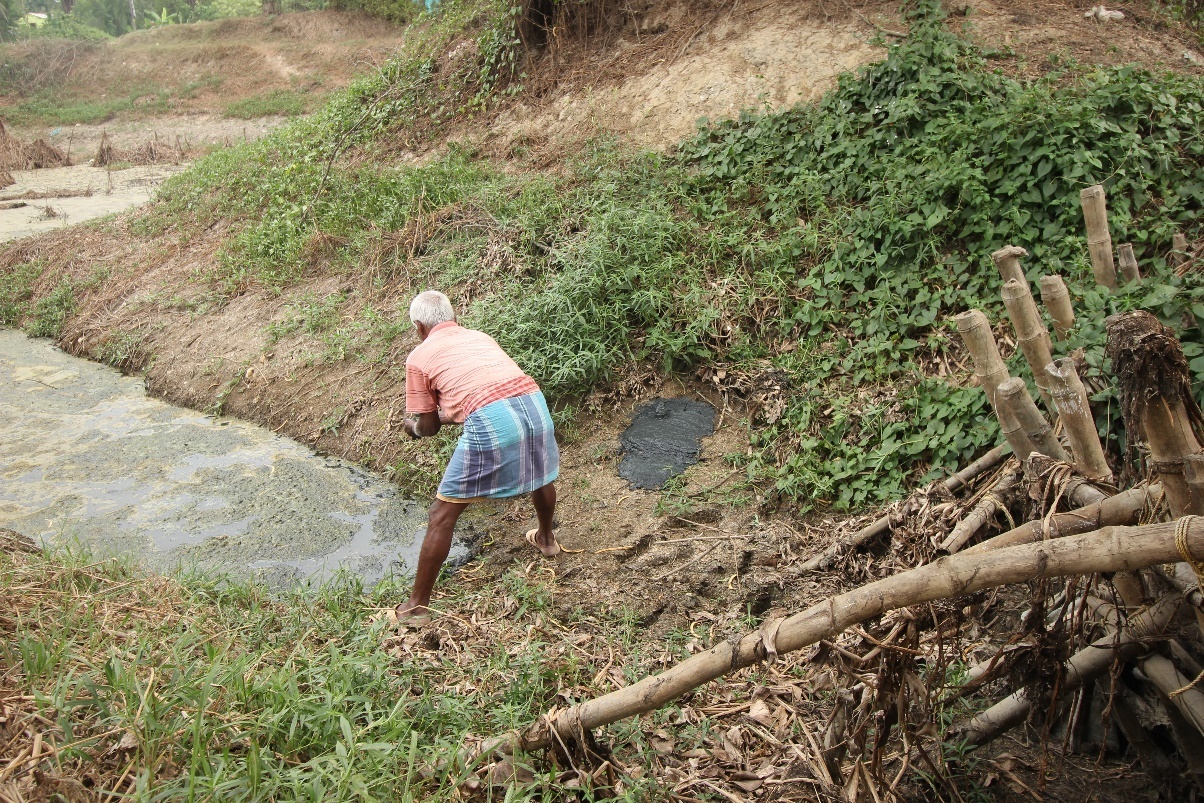
During discussions in the field, participants explained to me that Makal ṭhākur assumes the role of a tutelary deity for the fishing community of the Sundarbans. They colloquially refer to Makal as the jal deotā (water deity), who is among the deities associated with local pukur (freshwater ponds), canals, and bherī (water tanks) for inland fishing.[2] Jal deotā is primarily known to share a cordial relation with cultivable fish inhabiting various water bodies, which is why Makal is also referred to as mācher ṭhākur (fish deity). For adherents, Makal’s prowess circumvents only commercial ponds and not household or backyard ponds meant strictly for bathing, washing clothes, utensils, and cattle.[3] Thus the ritual of constructing a makeshift shrine and offering worship is not observed within a household nor does the practice of appeasing Makal involve any utsab (celebratory ritual traditions or grand festivals). From my observations between January and October 2021, I noted that sometimes a simple prayer uttered by a fisherman, or a prayer offered maner theke (from the mind) right before harvesting the fish would sometimes be considered enough to gratify the deity. The short ritual tract performed by a fisher may be one of the reasons why it is difficult for outsiders to trace Makal ṭhākur, especially when he is worshipped in his aniconic form. Since not every fisher within the community adulates Makal the snowball sampling method proved effective when the adherents sent me to their neighbors, idol-making artisans, distant friends, village priests, and relatives who were either familiar with or inherited the traditions of the deity.
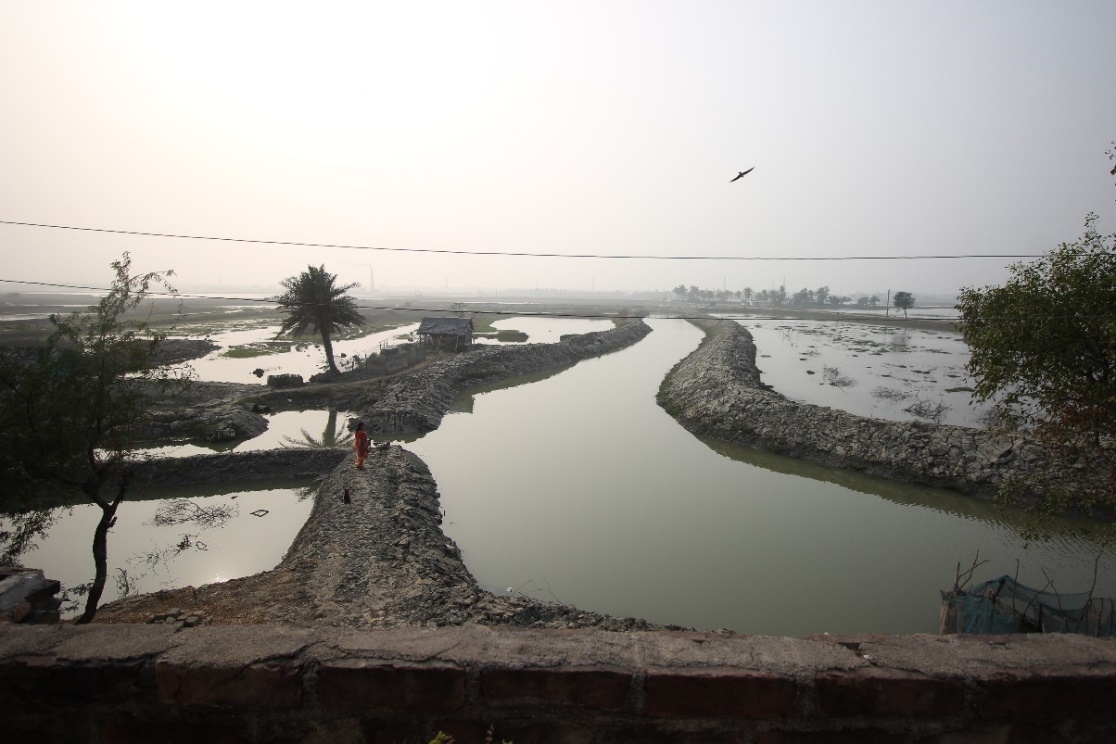
_paddy_tract_into_a_*bher*_(aquaculture)_for_fish_cu.jpeg)
Scholarly discussions surrounding rituals for this ṭhākur have been explained differently. Gopendra Krishna Basu (1966, 23–25) provides one of the earliest and seminal discussions about a non-Vedic iconographic representation of ṭhākur made by a local fisherman inverting two tumblers of mud to form a stūpa (mound). Basu then illustrates the ritual procedure involved and speculates that the nomenclature of the deity’s name could be a derived from names of other archaic local deities like Ath Makal, Mahakal, Khal-Kumari. He closes by saying that Makal rituals usually do not have any permanent dwelling spot, barring a few places where the deity’s icon is found to be sharing space with the figures of two other popular local deities from this region: namely, Dakshin Ray and Panchanan. In trying to locate the larger rationale behind the existence of “folk” deities, Rebati Mohan R. M. Sarkar (1997, 193) emphasizes that fishing near the forested islands of the Sundarbans is hazardous hence it inspires stories of bravado which are orally passed from one community to another and from one generation to another.[4] In such a case then, deities like Makal ṭhākur and others become central to such community-centric narratives (R. M. Sarkar 1997, 193). In another work, R. M. Sarkar (2009, 207) locates the significance of the deity within the complications of a fish-based economy:
All the traditional fishermen are seen to worship Makal Thakur with special regard. . .The fishermen believe that the tanks or rivers depict the infernal[5] region. The god Makal may give protected shelter to the fishes in the midst of water and submerged soil if he so desires. If such thing happens, fishermen would never be able to get any trace of the fishes in spite of their painstaking fishing activities.
Similarly, Dasgupta (2014, 159) highlights the deity’s significance as a “ritualistic icon” that carries immense socio-psychological importance for the adherents to keep livelihood hazards at bay. During field surveys, Dasgupta’s team spotted Makal worship among the fishing communities in Canning, Basanti, Gosaba, and Kultoli—all in the southern district of the Sundarbans. Makal worship must also be put in perspective within the larger context of the hydrocultural histories and narratives of the islanders, thus helping to understand the relevance of their livelihood-related rituals and deities in a better way (Ghoṣāl 2006, 69).
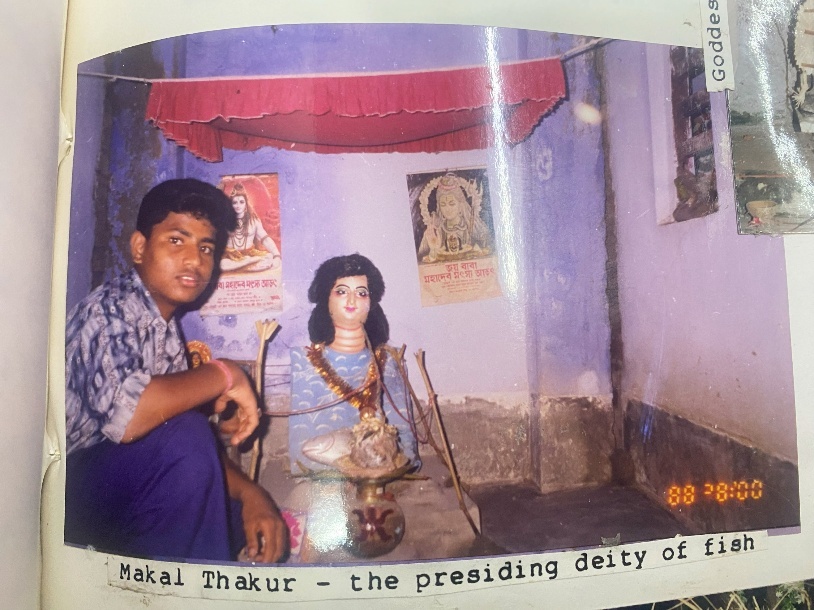
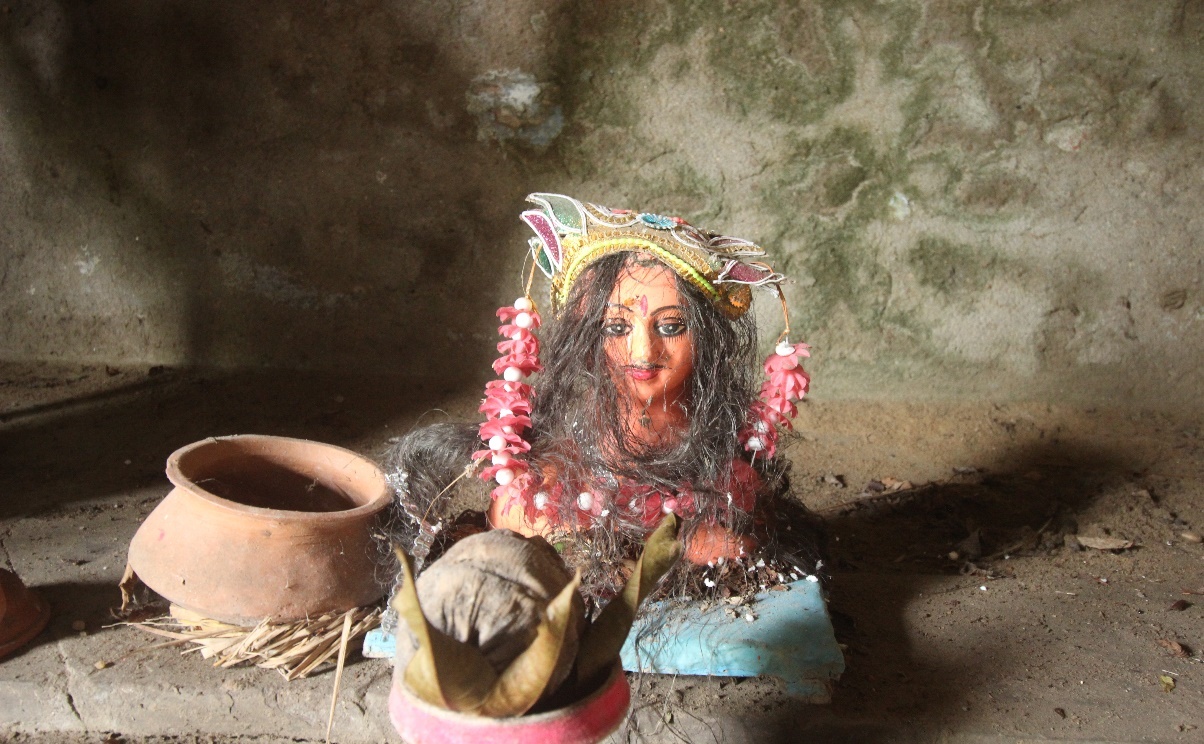
From the existing scholarship on Makal, I ascertained that two aspects were important for determining the present study’s overarching framework. First, the most frequently reported iconic representation of this fish and water-related deity was either aniconic or in the form of one or two small stūpa prepared by the hands of the fisher, then installed at an isolated corner of a cultivable pond bank (Basu 1966; Mīddyā 2017). However, Debabrata Naskar (2014, 2018) reports a variation in the iconic representation of Makal that sheds light on previously undiscussed features associated with the folklore of this deity. Engagingly, in a final report of the project titled Struggle and Work Among the Sundarban Fisherfolk in the Mangrove Ecosystem, submitted to the Indian Council of Social Science Research, New Delhi in 1997, R. M. Sarkar also reports his findings about Makal’s image in the form of a severed māthā (head) in a photograph taken in the field (R. M. Sarkar 1997, 248). In his description of the deity given in chapter five of his report, titled “Rites and Rituals in Fishing Pursuits,” Sarkar does not mention the exact location of the deity’s “place” (thān) within the three fishing village blocks selected for his study, which were Diamond Harbour, Kakdwip, and Sagar Island. Nor does he say much about this image of the deity or about the adherent’s ethnic affiliation. However, he identifies and labels the severed māthā as Makal ṭhākur’s image. To R. M. Sarkar (1997, 248), the deity’s icon appeared to him in the field as follows (Figure 2):

Debabrata Naskar observed that Makal is worshipped mainly by Hindu adherents, even though any ethnoreligious group can choose to revere him. Adherents believe worship is necessary to earn impressive profits. This results in pond banks becoming active sites for the preparation of temporary dwelling spots of the deity. Naskar estimates that Makal is worshipped in many forms. He also traces a route near the Biddyadhari River in North 24 Parganas of the Sundarbans, the northern district where he observed that in one of the community-owned thāns—also called ṭhākur bāṛis (house of the lord)—a severed māthā of Makal is collectively worshipped (bāroẏāri pūjā). In 2021, I was able to locate the same spot, which is presently located in the Haroa village block of North 24 Parganas, where the community members and a small group of middle-aged fishers hailing from the neighboring villages pointed the way and introduced me to the same isolated thān of Makal ṭhākur that Naskar mentions in his studies (2014, 2018). In these two works, Naskar contends that the name Makal is probably an apabhraṁśa (deviation) of the word māhākāl, an appellation of the deity Shiva’s fierce manifestation. With time, the inhabitants transmuted the word māhākāl into in everyday spoken usage. Naskar reminds the reader that in Indian mythology, there are multiple descriptions of Shiva in the various mythological purāṇas that present him as both the destroyer and preserver of the cosmos. However, in rural Bengal, Shiva assumes the role of a typical, potbellied householder who has a wife. He farms and fishes to earn his livelihood and support his family of six. Numerous folk narratives in rural Bengal also tell tales and ballads of Shiva, the fisherman. It is easy to hear stories of Shiva and his consort Gauri catching and selling fish in the market. One also comes across stories about Shiva and his fisherwoman wife, Kuchuni Bagdini, who replaces Gauri as his consort in the folk culture of the region. One can find such localized Shiva tales readily preserved in the oral traditions of the fishing community as part of the riverine culture in greater Bengal (Naskar 2014, 438; 2018, 50). Some traditional fishing communities are known to consider Shiva as their “fish god.” Sixty-four ballads focusing on Shiva documented from South 24 Parganas of West Bengal proclaim him to be the primeval lord of the sea. A popular tale, for instance, recounts that one day Shiva disguised himself as an ordinary fisherman and married a girl from the local fishing community. After his marriage, the disguised Shiva stayed back in the village where he married. During his stay, Shiva, as the son-in-law of the village, performed supernatural feats to help the fishermen in various challenging situations. Soon, the folks demanded that the disguised Shiva reveal his identity. Once he revealed himself to the fishers, the community began to revere him in his local form. As a result, the fishing community continues to follow a tradition of offering a portion of their catch to Shiva first. Only then can they take the remaining fish to market for sale (Naskar 2014, 438–39). Naskar’s conclusion includes an oral etiological tale explaining how Makal presumably originated. It narrates how rājā (king) Janak was offering his morning prayers to Surya, the solar deity, before performing sūrya pūjā (sun worship) in his pond with closed eyes. Right at that moment, the severed māthā of Shiva’s son Ganesh fell into Janak’s hand from the sky, a retribution due to Shani’s cursed glance upon him. The king was so captivated by the ethereal beauty of Ganesh’s māthā that he placed it carefully on the banks of his pond. This newly installed mūnḍū mūrtī (head icon) was then named Makal Ganesh (gaṇeś), which became an appellation for Makal ṭhākur. People started worshipping it from then on (Naskar 2018, 50–51).
Now, Makal’s iconography indicates something very intriguing. For a deity that was long considered to have been formless, then manifested himself in the form of stūpa, he suddenly becomes anthropomorphized because of his fusion with Shiva’s son. A few scattered scholarly discussions about this followed Naskar’s recovery of the deity in the form of a severed māthā, but no systematic survey has been conducted. Based on the iconic evidence found in such accounts and my own ethnographic observations noted during fieldwork, some further light can be shed on this specific folk deity’s apparent journey from an archaic past to contemporary times. As I conversed with a small group of participants in the field to account for how they incorporate Makal into their day-to-day decision-making processes, I built upon Naskar’s iconic findings and focused on the deity’s oral narratives, ritual worship, and folk beliefs. I did this with the intention of shedding light on some everyday explanations concerning the iconography I curated and compiled from the northern and southern districts of the Sundarbans.

During the earlier phases of my fieldwork in 2021, I could not trace the presence of Makal despite his exalted status as the deity of the water bodies and the fish who exist within them. A house-to-house survey of selected villages in the five northern village blocks and ten southern blocks in the jele pāṛās—the hamlets where all the fishing community members live together—revealed that Makal’s relevance is restricted to only a few inhabited areas of the deltaic region.[6] Since Makal is not a household deity,[7] the significance of his traditional stories and the subsequent rituals they engender survive only in the memories and oral traditions of those who are either actively involved in pond and tank fishing, or have observed the Makal-related rituals performed by village and family elders. It was therefore not surprising to find only three surviving elderly adherents of Makal ṭhākur in one of the villages of Mathurapur 1 village block during my field visits to South 24 Parganas. Other prominent folk entities of the Sundarbans—such as Bonbibi, Dakshin Rai, and Ghazi Pir—are supported by pīr kathās (Muslim saint stories), maṅgalkāvyas (Hindu auspicious epic poems), pālāgāns (ballads), and other long narrative hagiographies written or sung in the vernacular. The study participants, on the other hand, formally acquainted me with Makal through predominantly oral personal stories, memorates, family histories, and a few myths related to the deity.[8] During this time, the locals also frequently suggested to me, mostly during casual conversations, that the worship of Makal was prevalent in those blocks of the Sundarbans where dockyards and important fisheries were present. However, a visit paid to survey the three vital dockyards in Kakdwip, Namkhana, and Fraserganj in South 24 Parganas, as well as my ongoing interaction with the professional fishers at these docks, revealed that deities such as Ganga Devi and Bishalakshmi were more popular than Makal ṭhākur. In various other villages of Pathar Pratima village block and Sagar, the deity Bishalakshmi is considered to be the “daughter of a fisherman” and is worshipped by the local community not only for successful fishing but also for protection from troubles at sea.[9] It was only in the village blocks of Mathurapur 1, Haroa, Sandeshkhali 1, and Minakhan that the study participants agreed they actively celebrated the annual worship of Makal during the Bengali lunar month of Pauṣ Mās (approximately mid-December to mid-January).[10] Over the course of the other interviews, the timing of annual ritual celebration varied at different study sites. While some participants made their offerings to the deity during Pauṣ Mās (tenth lunar month), many others chose another time between Kārtik (eighth lunar month) and Māgh (eleventh lunar month), depending on the variety of commercially important species (for example, fish, crustaceans, and prawns) cultivated by the farmer or determined by the community. Another significant reason underlying the timing of the deity’s observance is determined by the time set for occasional auctions held to sell surplus from leased ponds. These dates largely depend on when the bherī owners (aquaculture operators) put up their ponds for lease. Also, the variety of crops cultivated determines when the fishers would determine how many Makal-related rituals should be organized. The annual communal catch only begins after such observances are fixed and performed.
In this manner, upon observing the living tradition associated with the iconography and worship of the deity near sites along the Biddyadhari River, I noticed the second significant aspect relevant to this study; namely, how Makal ṭhākur survives and thrives, through his folklore, which legitimizes his contemporary significance in times of major advancements in fishing methods. Since participants attested that they did not rely on any written almanac for information, I will attend to the significance of prose narratives based on my observances of the oral performances of their stories not only as a repository of the deity’s tradition but also as a means of its cultural transmission from one individual to another over generations, especially those involved in the operation of the aquaculture ponds.
Iconographic Variations from North and South 24 Parganas
Compared to the earlier representation of regional deities in the form of stones and other aniconic forms, present-day adherents now collectively worship many local deities in anthropomorphic forms. Known as mūrti pūjā (image worship), they focus on images prepared by the local artisan caste specializing in the construction of pratimās (images) of Sanskritic deities worshiped pan-locally and regionally. The deity thus makes itself “seen” to devotees through its image, whose eyes allow for visual interaction (darśan). So, in contrast to the previous estimation that Makal ṭhākur is worshipped only in the form of a stūpa, Debabrata Naskar’s recovery of the deity in the form of a mūnḍū mūrtī near the Biddyadhari River of North 24 Parganas in the Sundarbans provides new direction. Figures 8 and 9 show the thān, while Figure 5 showcases the distinct iconic form of the deity that Naskar recovered during his 2014 and 2018 field surveys. As I mentioned, in 2021 I observed the deity being worshipped at the same spot that Naskar briefly describes. Here, the tradition of worshipping the deity, the function performed, and its representation have remained uniquely the same. However, this thān of Makal ṭhākur near the Biddyadhari River was the last spot I visited during my survey. I will now report my observations of variations of the deity’s iconography that I found during my fieldwork.
I first became familiar with Makal ṭhākur and discourses surrounding his iconic representation—particularly in the cephalomorphic form—during a conversation in 2021 with a forty-six-year-old Adivasi Mahli fisher from one of the villages of Sandeshkhali 1 village block located in North 24 Parganas where he was born and is a fourth-generation inhabitant. As a shrimp cultivator, he owns thirty-five bīghās of shrimp pond land.[11] During our interview, he recalled that his father migrated from Ranchi in the state of Bihar to this part of the Sundarbans, hoping to find a better livelihood. His father began working as a forest clearer and eventually settled down as a vegetable farmer. The fisher was introduced to shrimp cultivation by one of the members of the grāmpañcāẏat (village council) who turned over three to four bīghās of land when he was fifteen or sixteen. Other members of the village (and a few “businessmen” from outside) reasoned with him that if his father’s agricultural land was not fertile or profitable enough, then shrimp or fish cultivation could become a less precarious enterprise. While embarking on this new venture, he heard for the first time about Makal ṭhākur’s legacy of miraculous powers, especially in matters of shrimp cultivation in designated ponds. The Hindu village priest clearly instructed him that worshipping this deity would ensure economic prosperity. Prosperity did, in fact, follow him from then onward, as he was able to procure more land for shrimp cultivation, build a pākkā (brick and mortar) home, then ultimately marry off his sisters and other relatives using the money he made, which all occurred in a rags-to-riches fashion.
For more than twenty years now, he has been earnestly performing the rituals of Makal ṭhākur near his shrimp ponds. He performs them once in the middle of Māgh with the help of a village priest. During the ritual completion, he introduces himself as the deity’s son, proclaims his life of hardship, and reminds the ṭhākur that his entire family’s wellbeing depends on the successfulness of cultivation. Accordingly, Makal ṭhākur has graciously acceded to his homage ever since. Unlike many other Hindu deities’ material representations, the image of the ṭhākur does not undergo visarjan (water immersion). So, every Śukrabār (Friday) this adherent offers some bātāsā, a sweet made from milk, cardamom, sugar, and clarified butter, to Makal inside his thān. The repetitive offering of sweets constantly reminds the deity to be kind to him and his family. He was the first person to introduce this tradition to his family members.
Nearing the end of our interview, I asked him to reiterate the deity’s significance in his life as a shrimp cultivator. In response, he nervously disclosed in passing that a certain “virus” could cause sickness or even death to cultivated shrimp and other fish, especially those raised in ponds and tanks. He hesitated to say this aloud, most likely because the interview was conducted in an open field near one of his shrimp ponds where his words might be overheard by others. He then expeditiously informed me that once a shrimp turns two months old, the nameless virus can infect the shrimp and cause incurable body rashes, presumably pustules on fish scales or a residual disease caused by pond cultivation. The shrimp usually succumb to severe skin infections then perish on the pond banks. Nevertheless, he quickly added that owing to Makal ṭhākur’s blessings, no pestilence has ever infected his shrimp farms (Interview, January 22, 2021).

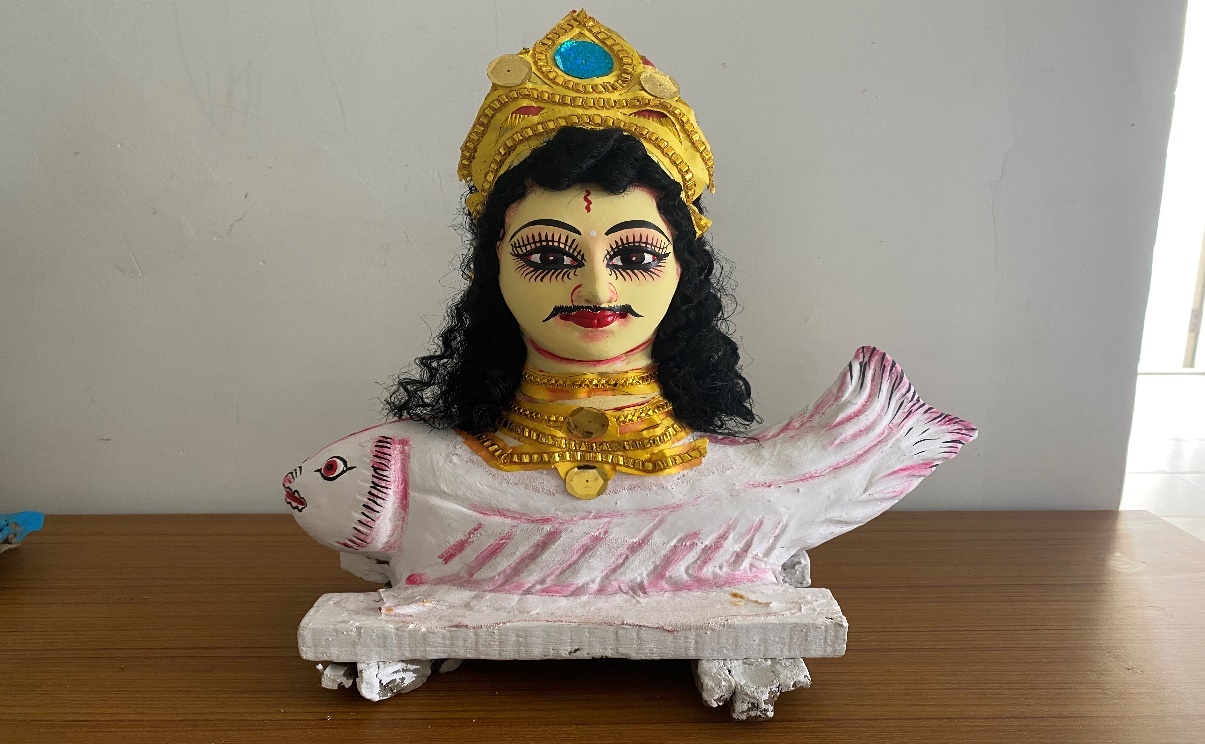
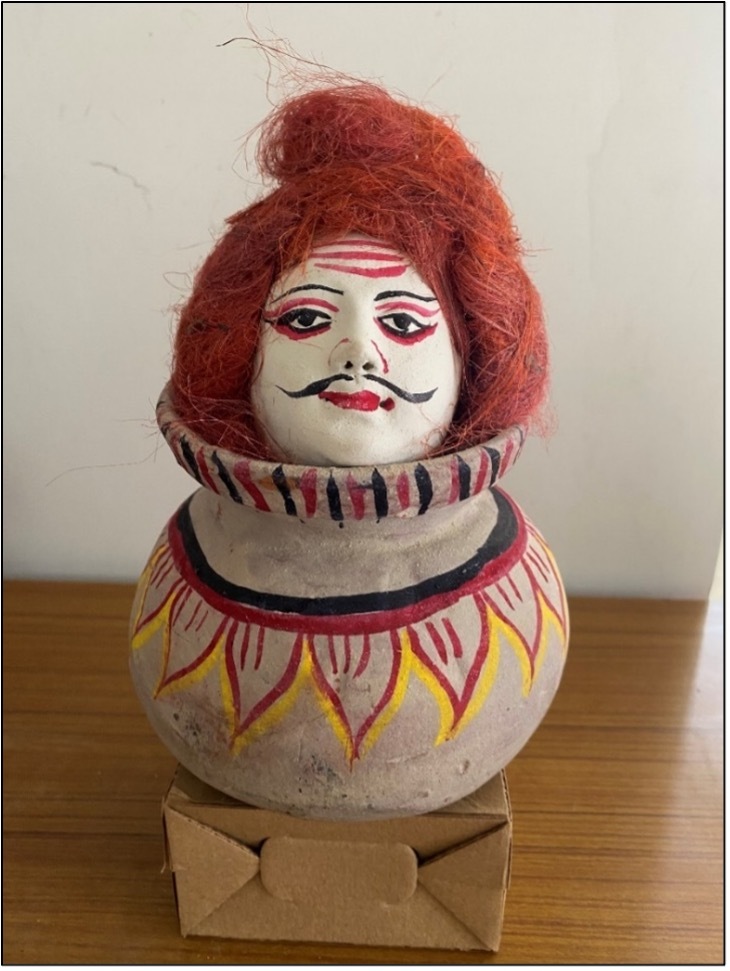
Based on the data recorded from this interview, I conducted a prolonged field survey of selected villages in the northern blocks of Sandeshkhali 1, Hingalganj, Haroa, and Minakhan, which led to two further accounts of Makal’s iconic image. The iconographies of the deity from these areas particularly showcased the severed māthā of Makal being worshipped by the fishing community residing in the northern district. Figures 5, 6, and 7 exhibit the cephalomorphic icon (mūrti) of Makal ṭhākur and the artistic variations of each. During a house-to-house survey in the jele pāṛās of the selected villages, I encountered several more representations of the deity within the blocks Haroa (Figure 5), Minakhan (Figure 6), and Hingalganj (Figure 7), respectively. These mūrtis were elucidated mostly by adherents (fishers, the image-making artisans, and village priests). The artisans who made Figures 5 and 6 are lower-caste Hindu Bengali men, and the maker of Figure 7 is an elderly Adivasi man.[12]

._photograph_by_raina__b_515851_.jpeg)

The three cephalomorphic mūrtis of the deity are approximately ten inches (25.4 cm) in height, with māthā made only of clay and sand. The artisans did not admit to using other materials like wood or any metal alloys to prepare them. They hardened the images in furnaces after molding clay into the desired shape. The final preparation involved painting the hard clay forms with evocative colors and adding large eyes, eyebrows, pronounced noses with nostrils, and mustaches to the faces, then adorning the māthā with a wig of moderately long matted hair, and adding a crown. The pupils are drawn at the very end, on the day of the icon’s delivery in a ritual known as cakṣurdān (giving of eyes.) The ritual act of drawing the pupils, infuses the deity’s icon with life (prāṇapratiṣṭhā), so the artisans consider it to be taboo to withhold the fully prepared icon after the pupils have been drawn and awakened. After its awakening, it is known as a jāgraṭa thākura (living lord). After completion, the adherent is called to carry away the prepared māthā of the deity, place it in the designated area near the water body, and invite the priest to do the ritualistic honors, if needed, depending on the severity of the client’s plight.
The idol maker from Haroa informed me that in 2021, he, a twenty-seven-year-old Hindu man, received orders mostly from other Hindu adherents to prepare six to seven images of Makal ṭhākur (in the form of Figure 5), mostly during Phālgun (the last lunar month of the new year) and Caitra (the first lunar month) (Interview, August 19, 2021). In Figure 6, the severed māthā of the Makal is fixed atop a fish, thus legitimizing the widespread belief that he is akin to fish and the rightful owner of them, thus making him the patron and protector of the fishers’ lineages. During another interview, the Adivasi image-maker of Figure 7 exclaimed that the deity Makal resembles Shiva. This artisan, a sixty-four-year-old Bhumij man, explained that he learned this rūp (form) of the deity from his father and elder brothers in the family, who prepared various images of the mostly Hindu deities in their village to earn a livelihood as artisans. A few fishers in his village have continued placing orders to prepare Makal ṭhākur as shown in Figure 7. This same iconic form of Makal was also prevalent during his father’s and elder brother’s time. He grew up watching and becoming acquainted with this tradition partly from what he heard from his father and the rest from his customers (Interview, June 15, 2021).
From the field interviews, it was evident that each of the deity’s iconic forms was supported by an oral story that the artisan had either heard within the community or inherited as part of the family tradition of the image-makers. The oral stories play a crucial role in determining the physical features of the deity’s iconic form. For instance, the maker of Figure 6, a forty-five-year-old Hindu man from Minakhan in North 24 Parganas told me that,
I heard from my father, who had, in turn, heard from the village priest that Durga’s son once had a squabble with his father Shiva. In anger, he severed the son’s head which then flew and stuck on the back of a fish in the sea. From thence, he somehow became the mācher rājā (king of the fish), Makal ṭhākur. And this is why people worship him, and this is the widespread belief regarding this (deity). . .This year I received around eight to ten orders to prepare the icon of the deity in this form. In our area (village), almost all the bherī owners possess this form of the deity. Usually, the Hindu bherī owners do it. From the Āśbin and Kārtik Mās (between mid-September to mid-November) onward, the process of excavating/draining most of the ponds begins, and this is when most of the pūjā will happen here. I recently received an order where somebody asked me to prepare two of this deity. (Interview, August 19, 2021)
This artisan did not comment on or identify the fish, seen in Figure 6 as the deity’s bāhan (vehicle). Rather, he simply emphasized that the fish’s presence solidifies its relationship to the deity. For both the artisans from Haroa and Minakhan, the deity’s representation relies extensively on variations of the deity’s myth about Ganesh that they have heard and learned either from their fathers, village priests, gurus, or from other respected elders in the community. Comparatively, for the Adivasi artisan, Makal represents another form of Shiva. Thus, narrative variations concerning Makal’s origins result in a variety of visual and material representations. In the cases of figures 5, 6, and 7, Makal ṭhākur’s severed māthā has become the visual and material focus of worship, but each of the forms of the deity is different, depending on the artistic creativity of the respective artisans living in the neighboring blocks of the Sundarbans where I found the images. The oral stories differed according to regional variants provided by community members either directly to the artisan or to those involved in the aquaculture sector.
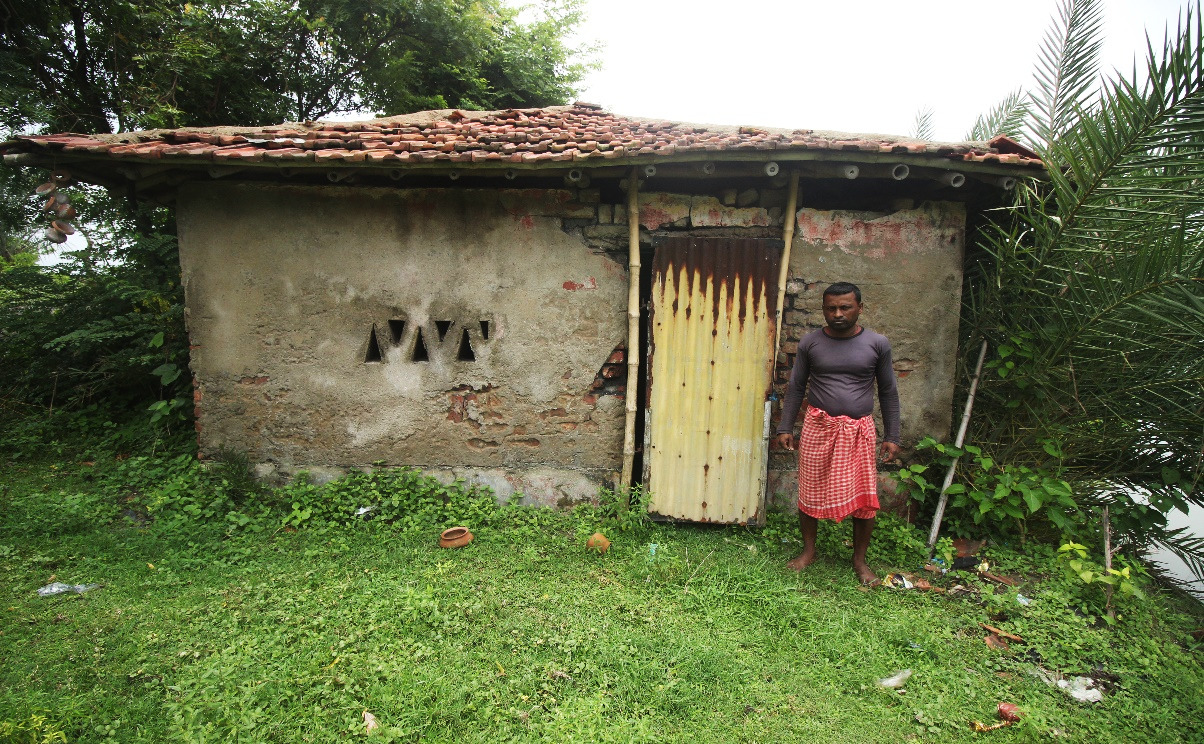
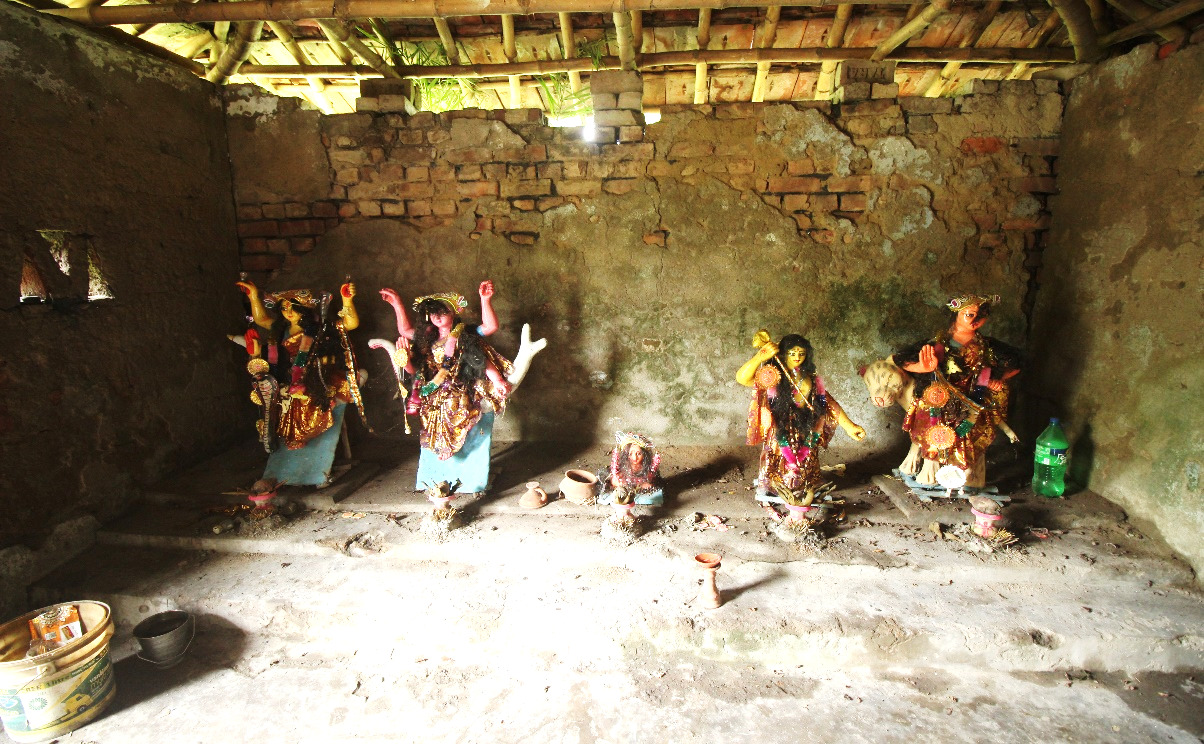
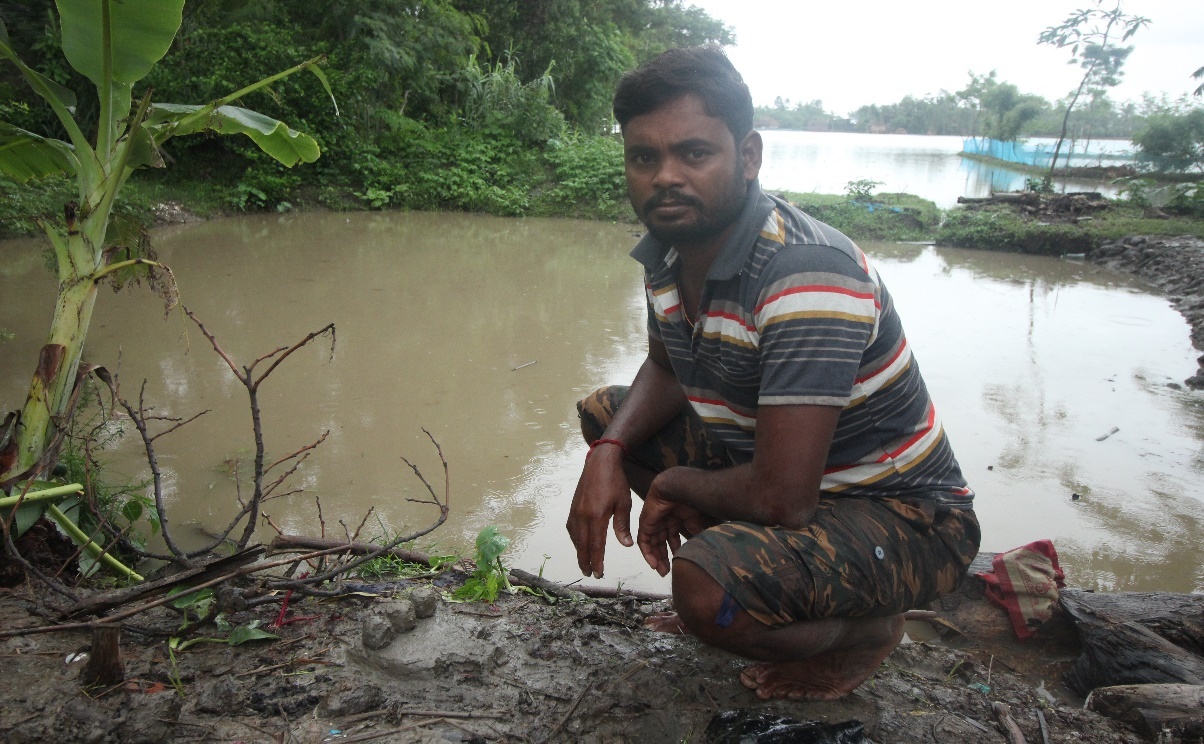
The image of Makal is usually installed inside a thān or a ṭhākur bāṛi (brick-built shrine), as seen in Figure 8. In both cases, these are located near a pond, or water source suitable for freshwater fishing. Makal ṭhākur is worshipped either on his own, or with six to seven other grāmadevatās (village deities) like Ganga Devi or Manasa, as well as with two other popular entities named Shahjangali, the “king of the jungle,” and Bonbibi, the “lady of the forest,” as depicted in Figure 9. Interestingly, when these deities are prepared and worshipped together in a group, they are collectively addressed as bherīr ṭhākur or jal karer ṭhākur. Bherīr ṭhākur refers to the deities worshipped together for the maṅgal (wellbeing) of the bherī (fishing tanks) and the fish cultivated inside them. Figure 9 further illustrates Makal ṭhākur being worshipped with other popular local entities of the Sundarbans at their common dwelling spot.
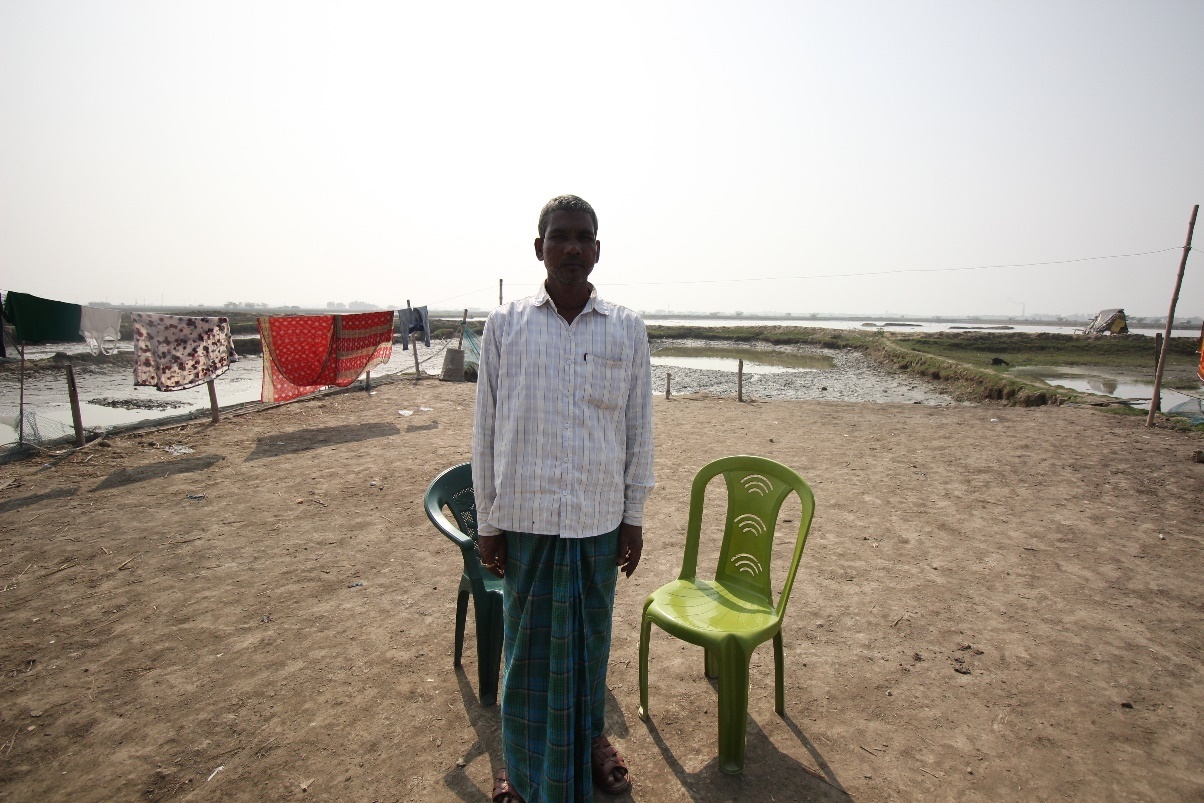
_standing_in_front_of_his_*hkur_bi*_(brick-built_shrine)_of_makal_.png)
_shown_in__figure_8_(311600)._here__maka.png)
In the case of Makal ṭhākur, his ṭhākur mūrti (anthropomorphic figure) was curiously not traceable during my 2021 survey, even though an elderly village priest—a seventy-five-year-old Hindu man from Pathar Pratima village block in South 24 Parganas—recalled witnessing the worship of ṭhākur mūrti. To him, the ṭhākur mūrti appeared more familiar to another prominent forest deity called Ateshwar (Interview, April 11, 2021). Except for this one participant, others professed that they were unaware of the deity in its human form. They were familiar with Makal either as a severed māthā or represented as a stūpa, depending on the region of worship. Here, I also could not report any account where an adherent unsuspectedly spotted the deity appearing as a handsome, brawny man or as a comely maiden fluttering about water bodies.[13]
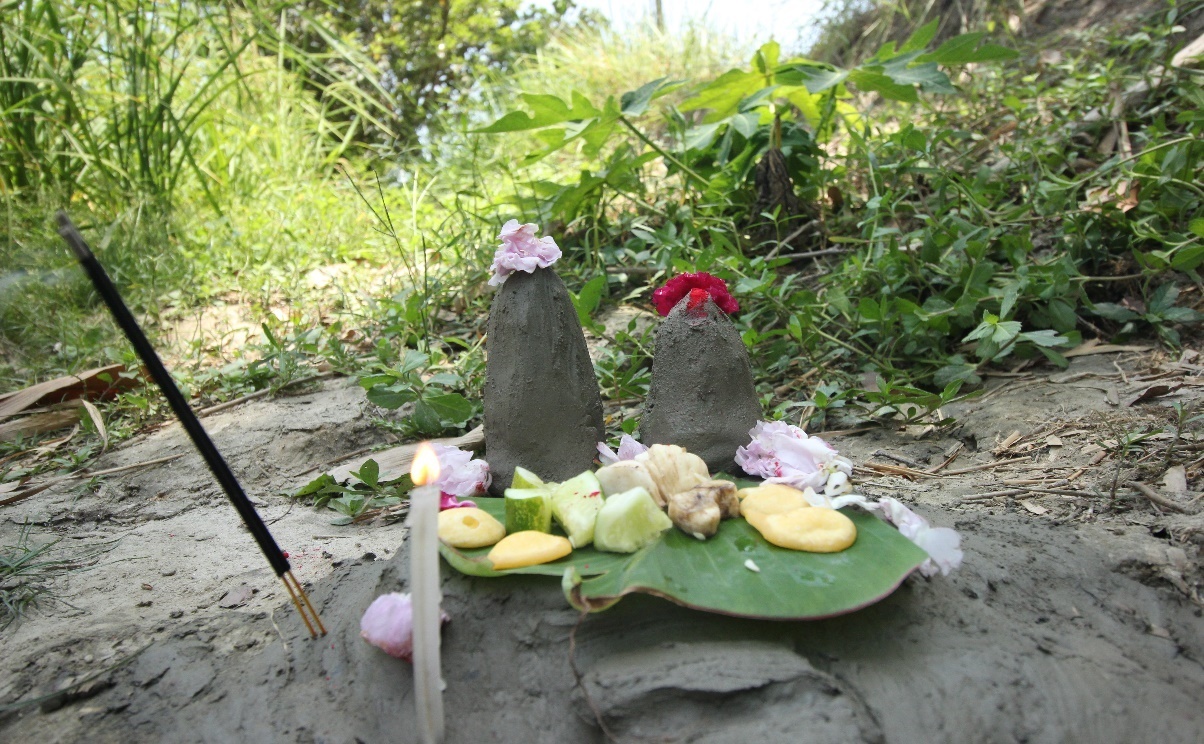
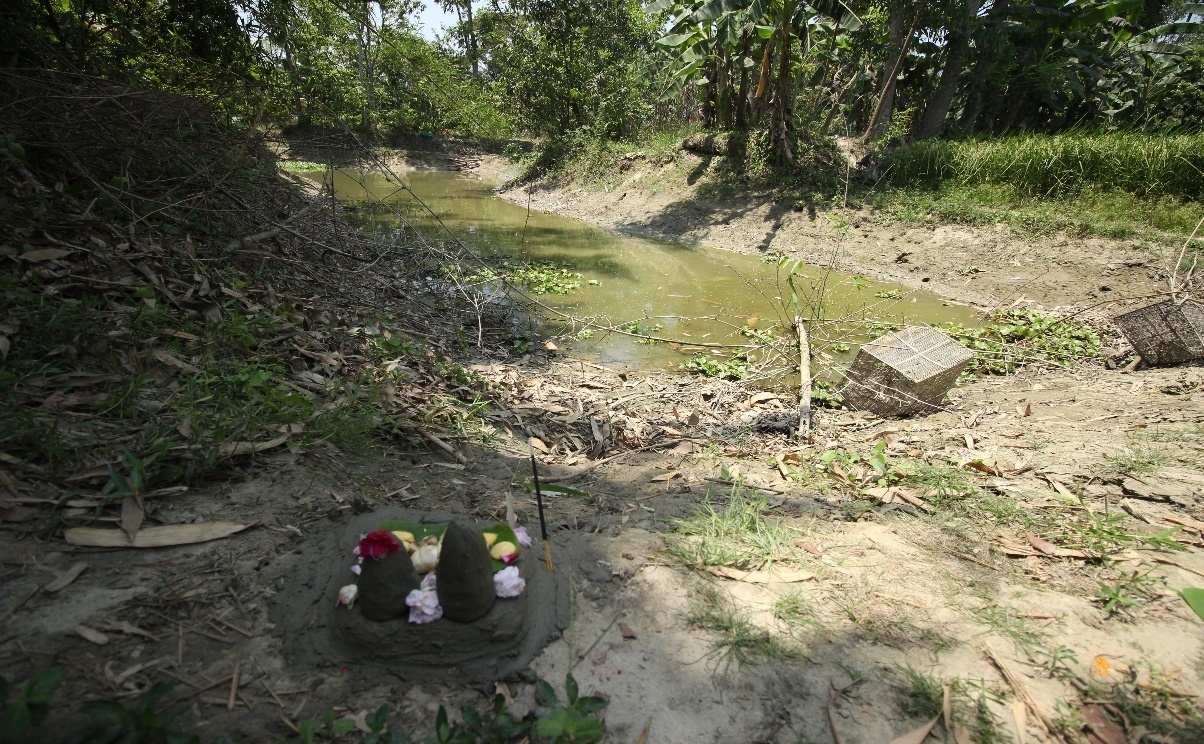
The most frequently reported representation of Makal at other sites is in the form of two stūpas. The stūpa of Makal ṭhākur is approximately three to four inches (approximately 10 cm) in height, and the accompanying stūpa is described as the deity’s consort. The accompanying female stūpa is smeared with sindūr (vermilion), thus characterizing her relationship with the deity.[14] Worshipping the deity in this form was found to be a common practice among adherents living in the southwestern village blocks of Jaynagar, Mathurapur 1 and 2, as well as a few areas within Pathar Pratima all of which are in South 24 Parganas.
_of_makal_*hkur*_on_the_left_with_his_consort_represented_on_the_rig.jpeg)
In a few other southern villages from Choto Mollakhali and Hentalbari in Gosaba village block, South 24 Parganas, the worship of Makal required the preparation of three stūpas instead of two. Pintu Sardar, a thirty-two-year-old Munda man, is an Adivasi fisher hailing from a village in the Gosaba block who preferred to prepare three stūpas. He dedicated each of them to Makal ṭhākur, Ma Kali, and a variable third spirit to pacify any bhūt (ghost or malevolent spirit) living near his cultivable pond (Interview, June 18, 2021).[15] According to him, after acquiring a suitable pond to lease, he began cultivating and harvesting fish throughout the year, which meant that he had to prepare stūpas and perform other obligatory observances related to the deity before each haul. In such cases of multiple pūjās (worshipping ritual), the stūpas of Makal and his consort are sculpted by the fishers who own the land immediately before harvesting from their ponds. The fishers thereby assume the priests’ role, carrying out rituals on their own accord. Pintu estimates his fish catch is about fifty kilograms per tonne per season, thanks to Makal’s recurring benevolence.

Makal has no vāhana (vehicle) or attendant, unlike many other more mainstream deities in the Hindu pantheon.[16] The northeast direction of a pond is usually selected to install the deities’ stūpas. It is customary to construct them under the open sky near a pond bank. Upon the installation of the stūpa, the pond bank becomes the ṭhākursthān (the sacred site prepared for installing the deity’s stūpa) for ritual offerings made to the deity. Once the pond is ready, the fisher adulates the makeshift shrine of Makal ṭhākur with offerings, consisting of bātāsā (a small crispy sweet cake), sindūr (vermilion), dhunā (incense sticks), mombāti (candle), gānjā (cannabis), ātapcāl (sun-baked rice), Tabernaemontana divaricata (tagar flowers), and some sort of phal (fruit), especially kalā (banana). After making their offerings, the farmer requests (prārthanā karā) that the deity be merciful and allow for a plentiful catch from the pond.
At the pond bank, the locus of worship, I found no custom of balidān (animal sacrifice) or any placatory offering. Neither the stūpa nor the icon is destroyed or immersed after its preparation; they usually succumb to the tide of time unless renewed (either annually or otherwise). There is no custom of reading any hagiographic punthi (punthi-paṛā) during the ritual nor any ṭhākurer boi (holy booklet) enumerating the ācār or pūjā paddhati (ritual conduct) to appease the ṭhākur either. After the ritual, the fisher begins installing the mechanized kerosene-run pumps near the ṭhākursthān to drain the pond water. Afterwards, the fisher and his coworkers collect the fish lying on the pond-bed. They consider this a pāonā (claim to the gift) from the deity.
Irrespective of whether the deity is worshipped in the form of a stūpa or in its cephalomorphic form, the mānasik or brata (vows) made to Makal are predominantly related to the fruitful catching and trading of fish to sustain livelihood. Typically, the placatory offerings to the deity are concerned with procuring luck in fishing, a good catch, the wellbeing of the catch, getting a profitable price for the yield, and ensuring their family’s overall wellbeing. The placatory offerings to Makal are not concerned with curing human illness, however. During the fieldwork I conducted across the surveyed areas in the first two phases of the COVID-19 pandemic, none of the interviewed participants acknowledged that they offered any “special” ceremonious ritual to the deity, nor did I come across any tale about water bodies related to Makal carrying any healing powers for the sick votaries. Instead, petitions to the deity included reminding him that the adherent had acquired a big pond for cultivation on an expensive lease for the upcoming fishing season and therefore requesting the deity to be merciful by blessing the fisher with a fair catch. Makal in short, does not offer consolation to humans afflicted with disease, unlike many other local Bengali deities, such as the small-pox goddess Sitala (Ferrari 2015) rather his function continues to be the savior of livelihood. He only remains involved with aspects of contemporary concerns related to fish cultivation. The vows performed in this context can be identified as what Raj and Harman (2006, 250) categorize to be “mundane vows,” the promises of wish fulfillment that are cardinally this-worldly, which is to say they are distinctly transactional, demanding success from the deity. The vows to Makal can also be understood in terms of what is known in the vernacular as lok brata (folk vows) wherein “there are no specific manuals for lok bratas. . .[they] borrow information for crafting ritual therapy from predecessors (e.g., family members or teachers), local narratives, a variety of ritual manuals (paddhati), the observation of other specialists (e.g., Brahmans, ascetics, physicians), and, lately, TV programs and the internet (Ferrari 2015, 49).”


My fieldwork further indicated that preparing stūpas and making offerings to the deity is the only performance associated with Makal. The preparation of the stūpa is an essential ritual. This ritual, however, is not celebratory in a social way. In many cases, the fisher carries it out individually each season. A Brahman priest is invited to officiate only in exceptional cases or when the deity is worshipped in his cephalomorphic form. In a 2021 interview, a Hindu man, sixty years or older from a village in Mathurapur 1 village block in South 24 Parganas reflected[17]:
A Brahman priest is sometimes invited to perform the worshipping rituals for Makal ṭhākur. A priest is invited, especially in the case of those ponds that are very “dangerous.” In such troublesome ponds, water keeps seeping up to the base of the pond from the pātāl (underworld). Even if we can see that the fish are present [after discharging the pond water], none of the visible fish can be traced or caught. If a śol (Snakehead Murrel) fish is spotted in the pond, you will not be able to catch it; similarly, all the fish will go away when you try to catch them. In such dangerous ponds, a priest is invited to offer worship to the deity Makal. So, we revere the deity with the priest’s help, and then casting the nets begins. The worship of Makal ensures that the fish continue to live in the pond until we catch them, and the caught fish are also healthier. In the village Koutala, there is another pond, which is a dangerous one. I do not know the present condition of that pond, but back when we drained the pond water, not a single fish was found. While working in this pond, my father fasted, lay near the pond, and cried. At night, he received instruction in his svapnadeś (dream) from Makal—that my father should empty the pond water for the second time after offering worship to Makal with the assistance of a priest. After the deity gave his consent in my father’s dream and the priest did the honors, it was only then that my father could find many fishes in that same pond like māgur (Walking Catfish), śiṅ (Catfish), bān (Indian Mottled Eel), and other varieties of fish. (Interview, April 17, 2021)
According to this adherent, the priest did not offer any placatory offering to Makal, but he mediated between the fisher and the deity and negotiated perils (if any), especially when the fisher felt that the fish mysteriously refused to be caught despite their hard work. Almost every participant appended a personal story like this to explain the need to invite a priest or account for the deity’s prowess in fish-related matters. Based on similar field narratives and lay practices, Makal ṭhākur was, however, not perceived as a malevolent deity. The deity is always welcomed by the adherent in and around the crop, and he assists the fishers with their haul as long as homage is paid. The activity of placating Makal thus appears to be an interplay where, on the one hand, the jele appeases the deity to catch fish successfully, and on the other hand, the fish claim extended ties with the deity to avoid getting caught by the keen eyes of the jele (Mīddyā 2017, 32).[18] During the interviews, almost all the participants emphasized this aspect in their own way. So, according to local beliefs, Makal keeps all the fish that might be living in a water body to himself (sṃgraha kore rākhā).
Only after the fisher has duly appeased the deity does Makal agree to release some fish from under his control. Regarding Makal’s representation, it can be said that those local deities whose tradition spans generations inevitably undergo a transformation in representation from aniconic to iconic as their popularity increases (McDaniel [2003] 2022). Such transformations of local deities only appear to be possible when communities continue to worship them based on pre-existing traditions. How human beings interact with their environment conditions the waxing and waning of patterns of worship. In this way, many deities start their journey as aniconic but gradually acquire an anthropomorphic form over time.
Makal’s Tradition: A Story about Ganesh’s mūnḍū and Other Personal Narratives
In the Sundarbans, local traditions depend on identifying where and how a deity originated and the continually changing personal experiences of their adherents (their worldly views, superstitions, and other conventional beliefs) concerning the importance of that deity in their lives. One of the ways a local deity’s tradition gets established is for a special relationship to be established between the deity, a place and its people (Korom 2016). The people dependent on the land discuss why the deity is extraordinary in their lives. Native deities and popular saints (for example, bībīs and pīrs) are endowed with well-established cultural traditions because of their perceived power and popularity. Included within these traditions are annual events during which hundreds of devotees and admirers gather in public to watch grand jātrā plays eulogizing specific deities. The audience members exchange notes on vows as a way of deriving ever-newer significances each year.
For Makal I found no enactments of the deity’s glory through the performance of pālā songs, jātrā performances, or any other rural skits based on vernacular mythology. Moreover, no popular representations of Makal were found in digital media or recorded on cassettes sold in music and entertainment shops in the village bazaars either. In Makal’s case, I found that personal stories of the deity became more important in the absence of such elaborate performative traditions. Instead, memorates serve as an essential medium of transmitting knowledge, worldviews, community beliefs, and the rationale that ensures Makal’s validity across time and place. The personal beliefs and narratives of devotees were found to be fixed in local places and in people’s interactions with local deities over time. In other words, devotees recount in dramatic form something that happened to an individual or group in the past and carry memories of the event with them from the present into the future.[19] Getting at the importance of such seemingly mundane stories required intensive field study, during which participants shared their experiences about how they were introduced to Makal as they switched to fish farming from other occupations, their idiosyncratic reasons for their enthusiastic participation every year, their change in fortune after welcoming the deity’s blessing, and the community values that reinforce Makal’s central role within their communities. All these factors continue to survive solely in the oral traditions of the region.
Here I present a summary of the Makal’s utsa (genesis/origin) that was explained to me repeatedly in the study areas where Makal worship continues to be prevalent. I came across two categories of respondents among participants: the first consisted of those who can delineate the utsa story of Makal ṭhākur as well as their personal experiences related to the deity, and the second who were fully informed about the functional significance of Makal as the deity of fish who extends protection to the fish and ensures monetary profits for the fishers resulting from their haul, but who did not have any vestige of knowledge about the deity’s utsa.
For the first category of adherents, the severed māthā of Makal ṭhākur worshipped by locals is the māthā of the Hindu pantheon deity Ganesh, the Hindu elephant-headed son of Shiva and Parvati-Durga who is known throughout India as the remover of obstacles (Somayaji 1983). The oral text that I was able to record goes something like this[20]:
Part One
Upon Ganesh’s birth, his mother, Durga, decided to organize a big celebratory feast for all deities so that they could bless the new-born child. The deity Shani was Durga’s elder brother and a maternal uncle to Ganesh. When Durga invited Shani to the feast, he declined, explaining that his arrival would harm his nephew. Durga explained that the feast would remain incomplete without the uncle’s blessing and reassured him that nothing could hurt her son. Shani then reluctantly agreed.
On the appointed day, however, as soon as Shani arrived and laid his eyes on Ganesh to bless him, the child’s māthā was immediately severed from his body and flew off to a faraway place. Shiva was consulted by all the deities upon the occurrence of this mishappening, after which he commanded that an elephant’s māthā should be placed on the infant’s shoulders. He also blessed the severed human māthā of Ganesh and foretold that this māthā would receive adulations from the humans who would find it in a river.
The story digresses from here to explain Shani’s curse. The accident caused by Shani occurred due to a curse inflicted upon him by his wife named Shaini. Shaini had once presented her wish to become a mother to their own son. However, Shani spent most of his time in deep meditation. So, when he was interrupted by Shaini’s persistent requests, he immediately asked her not to disturb him and glanced at her with extreme anger in his eyes. Saddened and equally angered by her husband’s reaction, Shaini was quick to curse the husband by letting him know that she was deserting him with a curse whereby extreme harm would befall anyone upon whom Shani laid his eyes, intentionally or not.[21]
Part Two
Returning to the main story, the severed māthā of Ganesh fell into a river when a group of jeles (fishermen) cast their fishing nets in that same river. They noticed that a severed māthā got entangled in their fishing nets, and a massive quantity of fish was immediately caught. Around six to seven of their boats were filled with a variety of fish. Soon, the fishers realized it was probably due to this floating māthā, which miraculously helped them get a bountiful catch. The selling of these fish made the fishers extremely rich, and they later became kings of the region. As this fishers group became prosperous, they procured the māthā of Ganesh and brought it back to their habitation. They named this auspicious severed māthā Machal ṭhākur (Lord Machal).[22] Since the fishers believed that their immediate material prosperity owed to the chance finding of the severed māthā of Machal ṭhākur, they began to propitiate the procured head as a deity with the help of community-based rituals. This is how the worshipping tradition of Machal or Makal ṭhākur was initiated for future generations, especially among the fishing communities.
This summary of the deity’s utsa recounted by six participants is slightly distinct from what Naskar mentions about King Janak, even though the common link to Ganesh and Shani is apparent. Despite referring to a Sanskritic deity like Ganesh, the vernacular ceremonies for Makal form an integral part of popular Hinduism as practiced in the local environment. It is possible however, that other versions of Makal’s utsa also exist. As a deity belonging to the fishing community, there are reasons to believe that there may have been earlier, archaic, pre-Hindu versions of the narrative that explain how Makal came to be. Later interaction with Hindu mythology could have then provided new symbolism, a redefined set of meanings, a new ritual cycle, which also included a material refashioning of the deity’s iconography that required further reinterpretation. When I asked my present-day participants why their ancestors handpicked Ganesh’s severed māthā to represent Makal they were at a loss for words. Based on their inability to provide an explanation, I must assume that because Ganesh carries the pan-Indian popular image of being the bestower of success and remover of obstacles, the fisher community has gradually appropriated the concept of the elephant-headed lord’s function in pan-Indian Hindu society to suit their own local needs by generationally redefining the peculiarities and attributes of Makal their own local deity, thereby aligning him with a better-known deity acceptable to Brahmanical culture at large. This kind of rapprochement is not an unfamiliar phenomenon in India, where deities from the classical pantheon of Hinduism become avatars of folk deities and vice versa (Wagle 1995). Focusing on such a “folkish” version of Ganesh becomes academically interesting because other indigenous beliefs about Ganesh can also be found wherein a certain peasant community from some other part of the country admires him as a god presiding over food crops. For them then, Shiva, the husband of Parvati (Durga in eastern India), their union, and their children all carry symbolic significance related to the rainy season and the abundant harvest subsequently expected by peasants throughout the region. And it is precisely Ganesh who presides over them all (Somayaji 1983, 20–22).
The second category of adherents, like Pintu Sardar and others, actively propitiated Makal every year but could not explain the deity’s origins. They knew why they were customarily worshipping Makal and his importance in rescuing them from various fishing-related frustrations. Participants like Pintu clearly emphasized that he had only heard various belief narratives surrounding Makal from his fellow fishers, but he never got a chance to hear the deity’s mythic origins related to Ganesh. In fact, for Pintu, it did not matter as long as Makal continued bestowing favors on him in the form of a profitable haul in every season. From the personal narratives of the other adherents shared while working, Pintu realized the material importance of worshipping Makal for a fisher like him. He did not know Makal’s birth story, but the oral stories in the form of advice received from his co-workers indubitably taught him that a successful expedition cannot only be ensured by adopting the latest fishing techniques or by deploying expensive quality seed into the cultivation process, since consent from the deity to catch fish and shrimp as well as the consent of the prey to be caught is perpetually needed to supplement and insure the effectiveness of modern technology being introduced from beyond the local environs. Through them, Pintu also learned about the paddhati and niẏam (prescriptions and manners) involved in the ācār (ritual conduct) expected of them to appease the deity.
Though some adherents are not fully versed in Makal’s local lore, this does not necessarily preclude his worship because their economic and social success equally relies on their broader participation in collective action within the jele community, which allows the marginal fisherman to become an integral and thriving component of entire fishing industry. This inherent play between the fish and the fishers is explained by another Adivasi adherent, a Mahli man, sixty-six years old from Pathar Pratima village block in South 24 Parganas. He, like Pintu, did not know about Makal’s link to Ganesh or about Makal’s origins in the mythological literature of the Hindus but shared a fortuitous experience in his life as a small-scale fish cultivator in the following narrative:
There is a massive canal nearby, and you will notice a variety of fish available when it gets filled with water [during the rainy season]. However, before draining the pond to catch those fish, no one has ever offered worship to this water body by calling upon the graces of Makal. As a result, even after efforts were made to drain the water from this canal, not a single fish was caught, so there was no monetary profit from it. Compared to this big canal, I always worship Makal ṭhākur in smaller ponds that we own, and every single time, I can procure a good quantity of fish from our smaller-sized ponds. So, even though that neighboring canal is big and has many fish, no one can capture anything living inside it. (Interview, April 11, 2021)
Similarly, a forty-five-year-old Hindu fisher I interviewed in 2021 who was working in his bherī located near the Biddyadhari River in North 24 Parganas evinced Makal’s influence in his life in a relatable manner. As he told me,
My father used to be a vegetable farmer, and then eventually, he switched over to tank fishery upon the insistence of other male villagers. Since then, he and his fishing mates from the village started to observe the annual worship of the deity in the month of Pauṣ at this thān (pointing toward the shrine as shown in Figure 8). The fishing haul can begin any day after this annual observance. Bonbibi and others occupy this thān but Makal is meant specifically for the wellbeing of the bherī. . . .There is a “virus” which, once contracted by the tiger prawn, is enough for them to perish instantly. This same (skin) disease affects the other cultivable fishes, too, almost in the same way. The major difficulty is that not many preventive medicines are available for this. This is exactly why I believe in Makal even more. So, if bābā (that is, Makal) agrees, then the fish recover, and if he doesn’t, then the fisher surrenders to the loss looming for that season. (Interview, August 17, 2021)
In the latter part of this interview, the participant also admitted that he was unsure about the deity’s utsa or any other kāhini (story) underlying Makal’s genesis. He had only heard about Makal’s fame and witnessed the observance every year from his father’s time within their village community. His biśvās (faith, belief, trust) in the deity comprised of his enthusiastic participation in the yearly joyous festivity that is conducted during Pauṣ in his village, as well as his reliance on folk remedies like jalpara rendered to him by the other members of the community to which he belongs, bolstered his conviction in the deities presence and power. Participation in community worship thus integrates non-knowledgeable members into the broader community network of fishers to guarantee overall success.
The jalpara ritual needs further explanation here since it plays an essential role in integrating marginal members of the community into the whole. It consists of placing a pitcher of water in front of Makal’s image overnight and then sprinkling this charmed water into the tank or pond where the fish and shrimp are to be cultivated. In case of other adversities, the fishers’ resort to a priest’s help, but the solution is sought by seeking blessings for the tank, acquiring charmed water to be used during incantations uttered to remove any spell. A fisher’s unsatisfactory catch inevitably means Makal is not pleased with the “insincere” ritual. In this regard, a seventy-one-year-old Hindu man from Gosaba village block in South 24 Parganas, asserted that in the last twenty-five years while preparing the shrine for Makal on the banks of his cultivable pond, he petitions the deity in front of his stūpa, uttering the following:
Dear Makal ṭhākur,
I request you to please bless this pond with fish,
Please ensure that I do not incur a loss. (Interview, June 19, 2021)
As part of completing his petitionary ritual, this participant nudged Makal by stating that he lives alone with his only son, and if the deity does not take care of them by providing a good quantity of fish in the ponds, then who else will? This example suggests that the entire ritual complex associated with Makal ṭhākur is a one of earnestly pleading with the deity to release the fish to guarantee succor, survival, and economic success.
Regarding other varieties of contemporary stories surrounding the deity’s tradition, I was also able to record texts about enchanted ponds or ponds that were home to an ill-willed spirit. In this light, a forty-three-year-old Hindu man from Mathurapur 1 village block, recounted the following tale from his childhood:
The area you see here has become a habitable locality now, but twenty or twenty-five years back, the surroundings were not as welcoming as it is now. So, when the fishermen dropped their fishing nets in the rivers and ponds of this region, a living fear of ghosts and other things was prevalent here. I have not seen it for myself, but I have heard mostly about this. . .from my father, uncle, and other elders that their fishing cages were filled with caught fish when they cast their fishing nets into the pond. So, it was difficult for them to work long hours with a heavy fishing cage hanging down their waist. Many would prefer to keep the fishing cages near the pond bank and resume working. . .as they got busy with their work, they soon heard a strange kīchir-mīchir sound (a specific type of chewing sound) coming from the insides of their fishing cages. . .I feel a shiver on my body while talking about this (nervously laughing). . .as the men checked to find where this sound was coming from, they soon saw that almost all the collected fish inside the cages were half-eaten, and only the fish skeletons and some ashy leftovers remained. Clearly, somebody. . .some bhūt has consumed all the collected fish inside the cages. . .This happened in a pond near to Jom pukur. . .The community marked this pond as the dwelling spot of the ghost Jom [and] that’s how it got its name. . . .Earlier, it used to be impossible to drain the entire water from this Jom pukur, but now machines are used, so that problem is not faced by the fishers anymore. (Interview, April 19, 2021)
There are also tales about another popular and mischievous bhūt-pret (ghost) called Jakke būṛī (an old woman), a petni or a rākṣasī lodging inside ponds.[23] According to a thirty-two-year-old Hindu priest in a village from Pathar Pratima village block, Jakke būṛī is widely known to be a malevolent old hag who scares people. She is even rumored to drown those who unsuspectedly enter a pond that she claims to own. According to the priest, deities like Makal are worshipped so that people do not feel scared while working around possessed ponds at odd hours of the day (Interview, April 11, 2021). During such conversations, a few participants even felt the need to escort me to the “problematic” ponds in their respective villages to substantiate their point. Here, according to the tales that people plainly discuss with each other (as they did with me), Makal’s supernatural abilities ensure not only the successful cultivation of fish but also keep the doings of a bhūt-pret like Jakke būṛī and Jom at bay.[24] A few other local legends and kiṅgbadantīs (rumors) about such enchanted ponds are based on a perpetual fear of bhūts and form a potent part of Bengal’s rural and urban folklore. Almost all fall within the ambit of didactic stories for children and cautionary tales for adults.

All these stories were told to me in the form of spontaneous reflections—and not sung—mostly by men at work, so it was possible to record them. The interviews about Makal ṭhākur were usually terse, where a participant would often go quiet after proclaiming something about the deity, such as, “pukure māch chāṣ korte gele, Makal pūjā korte haẏ.” Roughly translated, it means that if “one wants to do pond fish farming, then one has to do Makal worship.” Such oral folk wisdom is an integral part of the fishing enterprise in rural Bengal, especially in the Sundarbans, where it is one of the predominant occupations.
While conducting fieldwork, I was mostly searching for more concrete legends, myths, and dedicated punthi texts, which are common for other local deities, such as Manasa and Bonbibi. This insistence on my part often led to constant reminders from participants that the deity’s tradition occurred mainly in a “mouth-to-ear” manner, which is to say orally and aurally. As a result, their stories clearly distinguished between the deity’s probable origins and their belief narratives that emerged from day-to-day life experiences. Every time I asked participants to explain the deity’s significance in their lives, their responses were idiosyncratic and varied. The personal stories documented from adherents became the only potential sources that shed light on the deity’s living tradition. These contained essential clues to understanding the contemporary functions performed by Makal ṭhākur. And for those adherents like Pintu, who did not inherit the story behind the deity’s utsa, the stories shared by others in the form of advice were not just fascinating accounts of a miraculous event, but essential mediums of transmission of pervasive folk beliefs and recurring ritual behavior.
Despite the absence of any sacred or liturgical texts, oral stories, such as the ones recounted in this article, shared strictly within the context of the fishing season mark the ostentatious presence of Makal ṭhākur.[25] The tales and rituals of fishers, village priests, image-making artisans, and others create a story-world within which local deities and spirits, both benevolent and malevolent, interact with human beings and their sources of livelihood and sustenance. The notion of economic prosperity associated with the entire aquaculture venture thereby continues to legitimize and perpetuate the deity’s tradition in contemporary times.
Concluding Remarks
Based on the ethnographic data presented, Makal ṭhākur’s function resides in allowing fish to get caught during seasonal hauls and causing disease. In the absence of guidebooks for worship, this deity’s tradition is transmitted orally by his adherents as a verbal canon (Korom 1996). Further, oral stories about the deity and his deeds coupled with iconographic representations of him constructed by fishers are the primary rituals associated with Makal ṭhākur. For the study participants, their introduction to Makal ṭhākur and the ritual behavior required to gain his favor usually arose from the advice given to them from more experienced members of the community. Those who revere the deity in his cephalomorphic form were mostly unaware of regional variations in his image. Over the course of my discussions with the three artisans from Haroa, Minakhan, and Hingalganj, I shared photographs detailing iconographic variations of the deity to elicit “oral exegesis” (Korom 1997) to arrive at a better indigenous understanding of the ritual dynamics involved. It emerged that the continuity in the deity’s particular form was not only passed on by previous generations but depended on the deity’s popularity as well as the demand of devotees toward that specific rūp of the deity, which they considered to be his ādi rūp (primordial form). Since Makal’s cephalomorphic iconography does not wholly rely on any one established mythic motif about the his origin described in written sources—such as ritual handbooks, guidebooks for worship—or otherwise, the oral stories related in this article play a significant role in preserving the deity’s tradition and giving shape to prose and material variants.[26] This suggests that Makal’s tradition meanders orally through the lives of the fishers, who retell his tales during both work and leisure, thereby conditioning and reifying beliefs about him.
Incidentally, with government encouragement acres of traditional cultivable land in the Sundarbans has been rapidly brought under aquaculture schemes since 1991. This is mostly owing to the scheme’s ability to tackle livelihood issues and support national economic interests by catering to high international demand for frozen shrimp. As a result, a database compiled to document the economic progress made since the introduction of the scheme shows that the most extensive land conversion into aquaculture was reported to have occurred in Minakhan between 1986 and 2004 (Chopra, Kapuria, and Kumar 2009, 95). Further, 33,000 hectares of land in North 24 Parganas, along with 12,000 hectares in South 24 Parganas, have been used for shrimp farming with a potential for more (Chopra, Kapuria, and Kumar 2009, 110). For many, shrimp and fish farming rescues them from the threat of livelihood loss. Every year, self-help groups, fish workers’ forums, and village cooperatives from rural communities in the region report success stories of coming together to pool meagre sums of money to venture into common fishpond farming during the season. Tiger widows,[27] women fishers, men who want to improve their livelihood, or fishers looking to avoid a tussle with the State Government’s Forest Department over the acquisition and renewal of a license to enter the Sundarbans mangrove forests, have found a sustainable livelihood in the aquaculture industry. Many NGOs also collaborate with villagers to provide relief and skills to assist them to preserve and promote knowledge of local fish farming techniques while empowering those in need.
However, economic viability and human wellbeing in the Sundarbans are undercut by ongoing discourses about the region’s ecological fragility and land scarcity. Thus, coastal zone management practices persistently hover around the villages to remind fishers about climate-related changes, lessening biodiversity loss, and the overall impact their livelihood has on the coastal ecosystem. The latter scenario, then, is where Makal’s presence comes into play, since the fishers reckon that his grace accommodates their existential needs vis-à-vis the various anthropogenic pressures within the fishing ecology.
Acknowledgement
I acquired the three icons of Makal ṭhākur as shown in figures 5, 6, and 7 during fieldwork, then donated them to the Museum of the Ramakrishna Mission Institute of Culture, located at Gol Park in Kolkata, India. Interested readers can pay a visit to the museum at any time of the year to view these three icons of the deity on display there.
The traditional caste hierarchy within Hindu society places the fishers among the lowest communities. They are categorized constitutionally as a scheduled caste.
Both the Hindu and the Adivasi participants referred to Makal either as ṭhākur (lord), deotā (deity), or bābā (father) during the field interviews. I have translated all three terms as “deity” throughout this paper.
I prefer to use the term adherent instead of devotee, since the latter more properly describes people involved in the bhakti or devotional stream of pan-Hinduism, although it is sometimes also used for people engaged in the worship of local folk deities.
I use quotes for the term “folk” (translated as lok in most Sanskritic vernaculars) to highlight a general dissatisfaction with the term, especially in the Indic context (see Korom 2023). However, the term continues to be used by Bengali scholars writing in the vernacular (e.g., Basu 1966; Deb, Guha, and Chakraborty 1998; Dutta 2009; Ghoṣāl 2006; Maity 2017; Naskar 1999, 2014, 2018; Niyogi 1987, and B. K. Sarkar 1917), which is why I am using it here.
By “infernal” here, I am referring to pātāl or the underworld.
I conducted ethnographic research in specific villages within the village blocks Haroa, Minakhan, Sandeshkhali I, Hasnabad, Hingalganj, Jaynagar I and II, Namkhana, Mathurapur I and II, Kakdwip, Pathar Pratima, Sagar and Gosaba in the Sundarbans of West Bengal. The present study is based on the fieldwork conducted for nine months in the selected villages in the North 24 Parganas and South 24 Parganas districts. The selected villages were either coastal or harbored several man-made and natural ponds, tanks, and water bodies meant specifically for commercial fish/shrimp farming.
Gṛhadevatā (household deity) refers to those entities worshipped and adulated within the boundaries of the home (homestead) or in the shrines located inside homes. Usually, household deities fall within the purview of domestic ceremonial rituals in terms of kulācāras (family ritual) and strī ācāras (rituals performed by married women), which are adorned with elaborate rituals and celebrations for the welfare of the ancestors, the family, and its concerns related to birth, death, and prosperity.
For the significance of these Bengali genres in relation to local worldview, ritual practice, and everyday life, see Korom (2000).
The shift from a masculine deity to a feminine one is worth noting but cannot be pursued here. Suffice it to say that goddesses predominate in Bengali popular religion.
Depending on the variety of fish/ shrimp cultivated, the time of Makal worship varies. This is why respondents from different study areas reported worshipping the deity at different times of the year.
Bīghā refers to a measurement of land commonly used in northern and eastern India, Bangladesh, and Nepal. Since the amount was never standardized, sources vary on size roughly from 6,800 square feet to 73,900 square feet.
By the virtue of sharing habitable space with Hindu neighbors, this senior artisan frequently receives orders to prepare a variety of Hindu and Adivasi deity images at different times of the year. While introducing himself, he informed me that he grew up watching his father and elder brother prepare icons of several local deities, and he is now continuing with the same tradition for his own livelihood. As a village artisan by profession, this explains his familiarity with deities like Makal and other non-Adivasi local deities.
My field discussions mainly focused on narratives surrounding Bonbibi and Makal, especially in the deforested village blocks away from the Sundarbans Biosphere Reserve (SBR). During such interactions, some devotees chose to explain their miraculous experience with Bonbibi through distant visions of her as a coy woman amid a paddy field or near an embankment. I enumerate a few examples of such instances elsewhere (Bhowal 2021). From my Makal study participants, however, I could report no such visions.
Sindūr is placed in the part of a married woman’s hair in greater Bengal, so the mound smeared with it can be assumed to represent the consort of the male deity.
Except for Pintu Sardar’s name, whom I refer to throughout this article, the names of the other participants have been anonymized in accordance with their wishes.
The Sanskrit term is written as bāhan in Bengali, as earlier in my discussion.
The islanders colloquially speak the Sundarbani dialect of Bengali, but the interviews were conducted in calit bhāṣā (standard Bengali). All the documented oral stories recorded from the participants are transcribed and translated from Bengali into English. As the translator, I have simplified the original narrations to improve readability. Usually, the stories were narrated to me in a sense of awe and sometimes nervously.
This kind of interspecies reciprocity in South Asia has now become an emergent area of interest in academic studies of the Anthropocene. See, for example, Govindrajan (2015) and Govindrajan, Zhang, and Stewart (2022).
Personal stories are an understudied genre of Bengali folklore but need attention precisely because of their importance. See Korom (2000, 2016).
Here, I have given a briefly summarized version of the oral story shared by my six participants. For ease of explanation, I have divided the composite narrative into two parts.
I was erroneously under the impression that this version in its entirety existed purely in the oral tradition of the devotees. However, along the lines of my conversation with another participant in 2021, a seventy-eight-year-old Hindu man who hailed from Mathurapur 1 in South 24 Parganas, I soon learned that part one of the story is available in the Brahmavaivarta Purana (Anonymous 2018), a Sanskrit text composed in medieval Bengal. Its third chapter, titled Gaṇeśakhaṇḍa, contains Ganesh’s birth story. The story of his māthā getting severed from his body due to Shani’s cursed glance is found in lines 3.11.10-3.12.7. A formal elaboration of this birth episode and its significance is explained by Courtright (1985, 71–74). This was a chance finding because the six participants narrated Makal’s genesis as a single whole without differentiating or indicating which part had been borrowed from which source, which is often the case in India, where the oral and the written flow back and forth seamlessly (see Korom 2023).
One of the six interviewees in 2021, a seventy-eight-year-old Hindu man, used Makal and Machal interchangeably during the interview. He, in fact, said that the name could have been derived from the colloquial phrase māch ālā ṭhākur (deity of the fish), which later transmuted from Machal into Makal (Interview, April 17, 2021).
The term is also pronounced as buḍī (old hag). Petni and rākṣasī refer to other classes of ghosts and demons, respectively. Petnis are female ghosts who are either widowed or tragically die with unfulfilled wishes.
Such bhūt-pret stories are integral to the Bengali sociocultural fabric. They affect the day-to-day decision-making of subaltern people living in West Bengal. Previous scholarship has shown that Bengali ghosts often expose the sociocultural pressures faced by the living. Their mischievous intrusions highlight how patriarchy, caste exclusion, economic exploitation, and other forms of oppression shape the lives of women, the poor, the disabled, and other marginalized groups. After an untimely death, such figures reappear as bhūt, pret, petni, or rākṣasī—malevolent spirits driven by vengeance. The presence of Bengali spirits also has broader implications for promoting indigenous sentiments and for serving as a form of entertainment to the folk.
In this sense, the narratives create a sort of “oral canon” (Korom 1996) upon which the deity’s belief and worship are based.
And such narratives for Makal were spoken, not sung, as is more common in the worship and praise of other local Bengali deities and saints.
Tiger widows are wives whose husbands suffered untimely deaths resulting from tiger attacks in the jungle.